
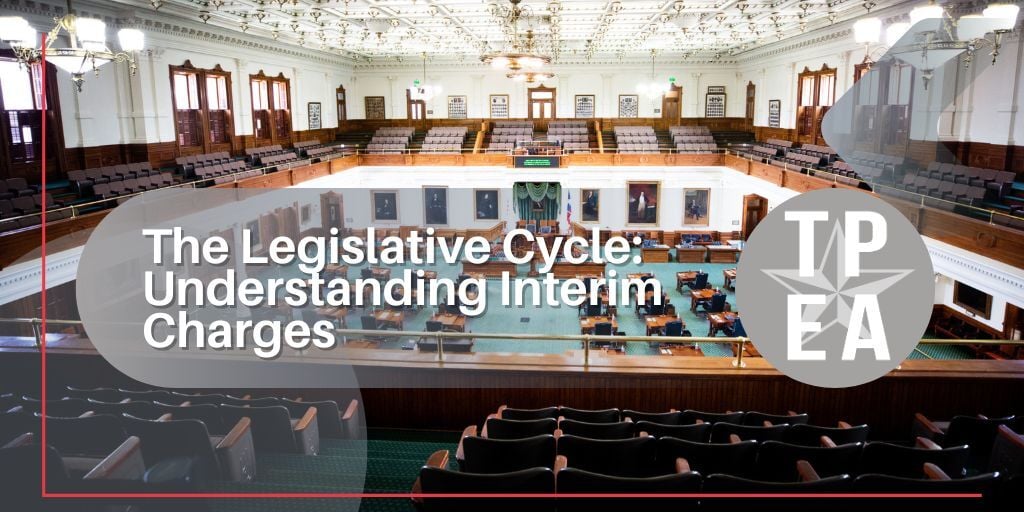
The Legislative Cycle: Understanding Interim Charges
Published by
Texas Public Employees Association
on
We've said it before, and we'll say it again; the legislative cycle doesn't end with the legislative session. Not only do elections occur in the interim, but there are many events happening right now that directly impact what happens in the upcoming session. Let's talk about Interim Charges.
What are Interim Charges?
On March 27, 2026, Interim Charges were released for the House and the Senate. The Lt. Governor creates the charges for the Senate, and the Speaker of the House creates charges for the House. The charges addresses specific committees regarding items and topics that demand further review and research. They also include instructions for monitoring the implementation of bills passed in the previous session to ensure they are being enacted and enforced.
What do they mean?
The Interim Charges are sort of a sneak peek at what's going to be a focus during the upcoming session. They are intended to provide information and data that can be used during session to support or oppose future legislation. They can also be used to determine the efficacy of previous legislation that has been put into action.
Why do they matter?
Simply put, they matter because they affect every aspect of a Texan's daily life. This year's Interim Charges cover a wide range of topics, such as:
-
Natural Resources and Infrastructure
-
Technology
-
Education
-
Fraud, Waste, and Abuse
-
Criminal Justice
-
Health and Human Services
-
Veteran Affairs
How does this impact you?
On the whole, Interim Charges affect every Texan, because they help shape the upcoming legislative session. But there are also specific charges that will directly impact state employees and retirees, such as:
-
The Senate Health and Human Services committee has been tasked with including ERS in their review of health care costs in and for the state. A hearing has not been set, but we will be on hand to support the insurance needs of state employees and retirees.
-
The House Pensions, Investments and Financial Institutions Committee will soon announce the date of a hearing to review the status of the state's major retirement systems, including ERS. We will be there to offer input and data in support of ERS' needs.
We'll be keeping an eye on the outcomes of these 2 hearings and keep you informed every step of the way.
Remember: We do what we do because we know the importance of the needs of state employees and retirees. And we get to do it because of our membership. If you aren't currently a member, now is the best time to join.